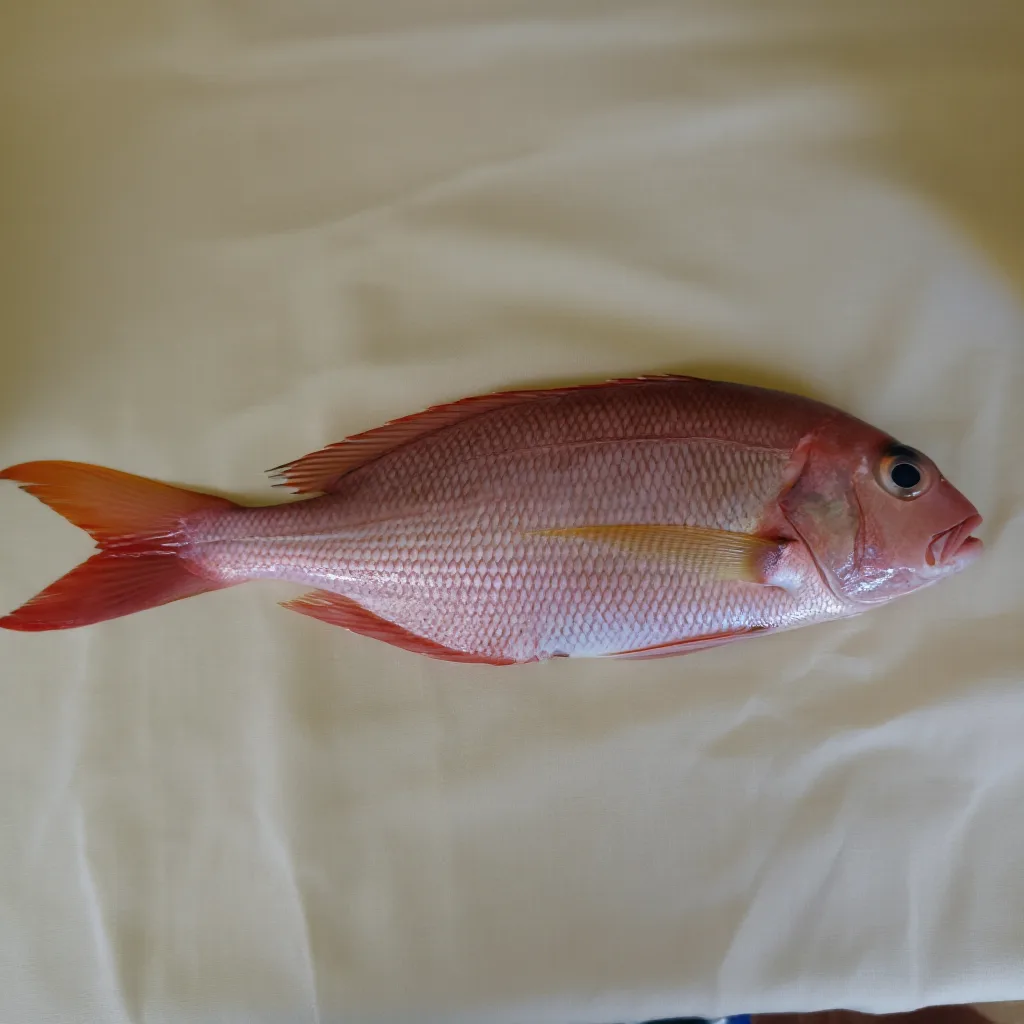
Appearance
Red mullet have a distinctive copper-pink to reddish body, a steep-sloped forehead, and two long, sensitive barbels beneath the chin used to probe the seabed for food. They are a modestly sized fish, typically landed at 15 to 25 centimetres, with a compact body built for foraging along the bottom rather than open-water speed.
Nutrition
Red mullet is a lean, white-fleshed fish, offering high-quality protein with comparatively little fat compared with oily species like sardines or anchovies. Its firm flesh and mild flavour make it a good source of easily digestible protein without the fishier taste some other Mediterranean species carry.
Similar species
It is sometimes confused with the closely related striped red mullet (Mullus surmuletus), a similar reef-dwelling species with more pronounced striping; both are marketed and cooked in much the same way, and the distinction matters more to biologists than to cooks.
Related dishes
Red mullet is traditionally cooked whole and briefly, most often pan-fried in olive oil so the skin crisps while the flesh stays moist, or grilled. Its liver is considered a delicacy in some Mediterranean traditions and is occasionally left in during cooking for extra depth of flavour.
Good to know
Red mullet was so highly regarded in ancient Rome that wealthy diners are said to have paid extravagant sums for large specimens, sometimes watching the fish change colour as it died as a form of table theatre.