Appearance
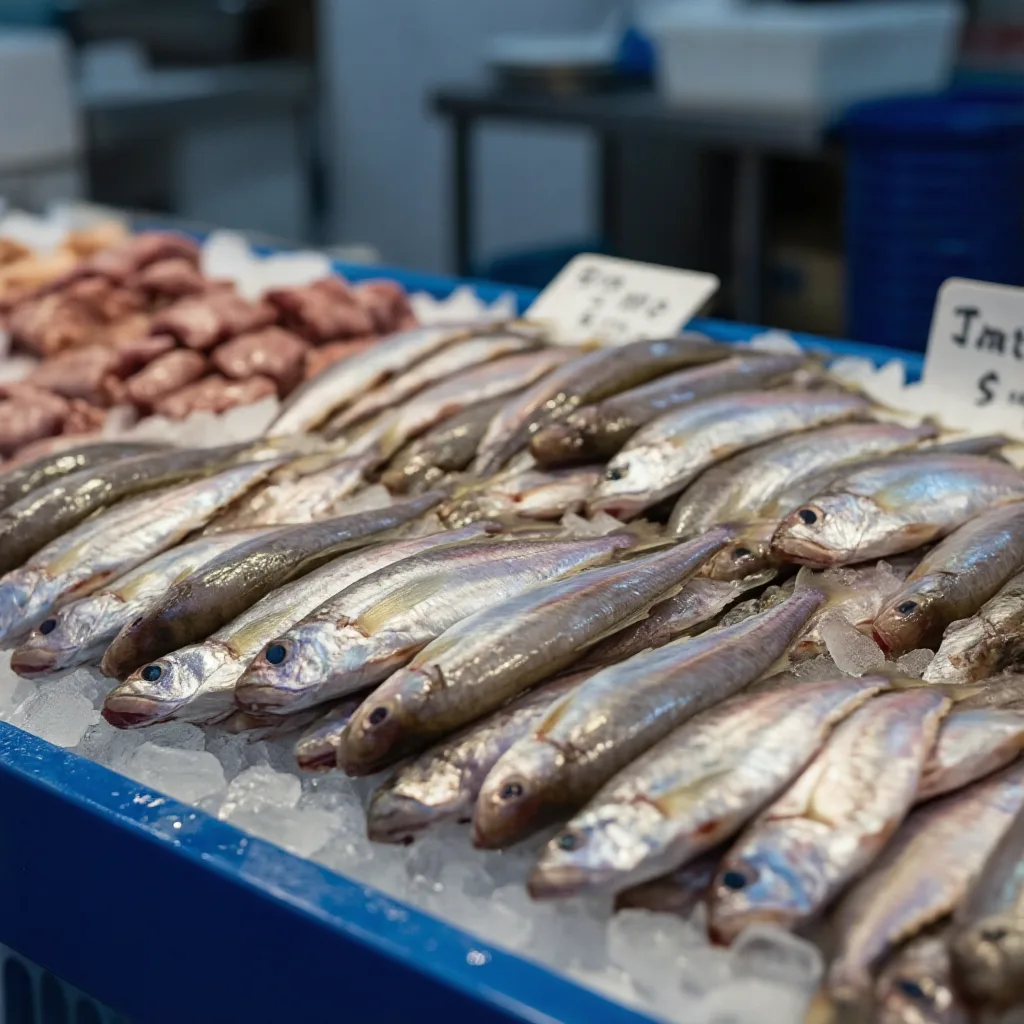
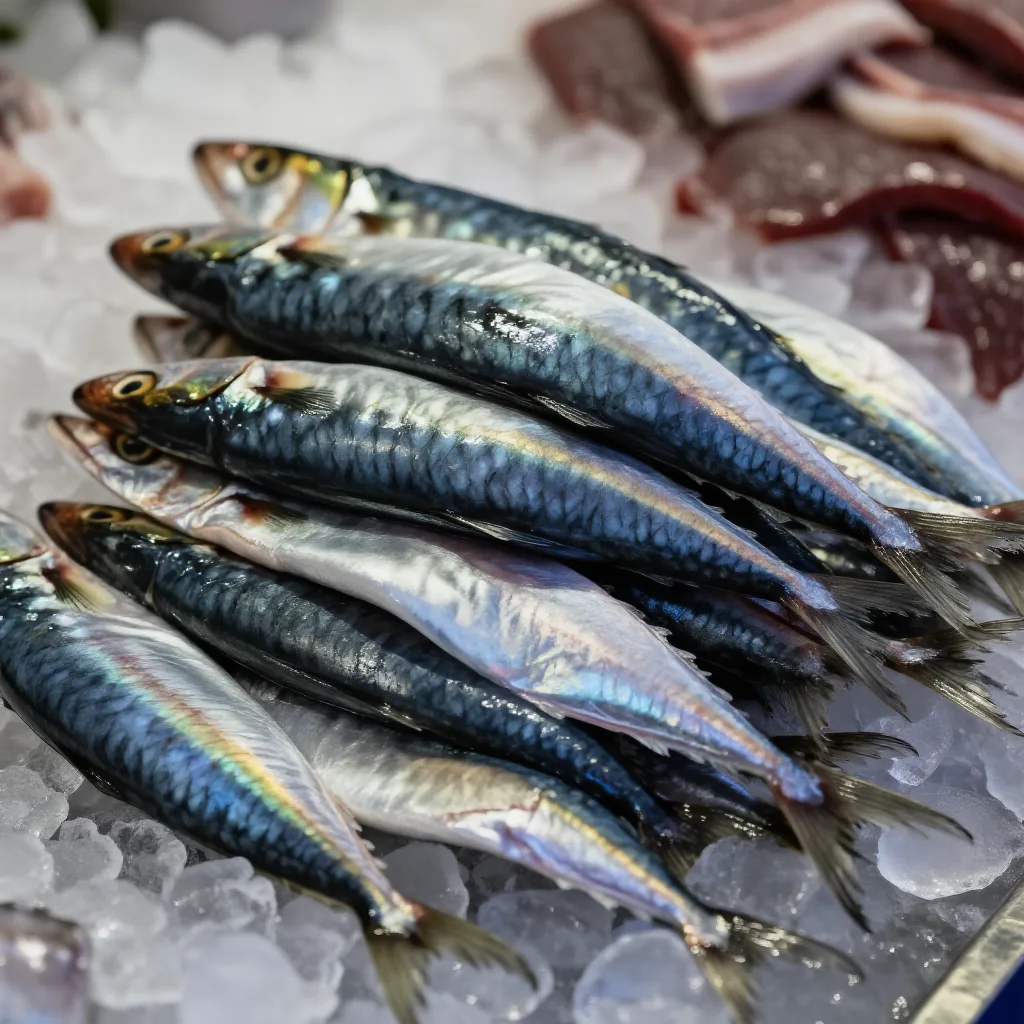
Sardines are slender, rarely longer than a hand, with a rounded belly and a single dorsal fin set midway along the body. The back is a deep blue-green that fades to bright silver along the flanks and belly, an adaptation that breaks up their outline against light from above and below. Loose, easily shed scales are typical of the species and a normal sign of freshness rather than damage.
Nutrition
Sardines are an oily fish, meaning much of their fat is the unsaturated kind associated with heart and brain health. Eaten whole, including the soft bones, they are also a useful source of calcium. As a small, short-lived species low on the food chain, they tend to carry fewer accumulated environmental contaminants than larger predatory fish.
Similar species
Anchovies are the fish most often confused with sardines, and the two do share waters, silvery colouring and oily flesh. Sardines are noticeably plumper and larger, with a milder, less assertive flavour once cooked; anchovies are slimmer, more intensely flavoured, and more commonly cured or salted rather than grilled whole.
Related dishes
The espeto de sardinas — sardines threaded onto a cane skewer and propped over an open fire of olive wood embers, usually on the beach — is the dish most associated with this coast. Sardines are also grilled simply over charcoal, fried whole in flour, or occasionally salted and cured in the style used for anchovies.
Good to know
The espeto is thought to have originated with fishermen in Málaga in the nineteenth century, cooking their catch directly on the sand using improvised skewers of cane. It remains one of the few dishes in Spain still commonly prepared over open embers rather than a grill.