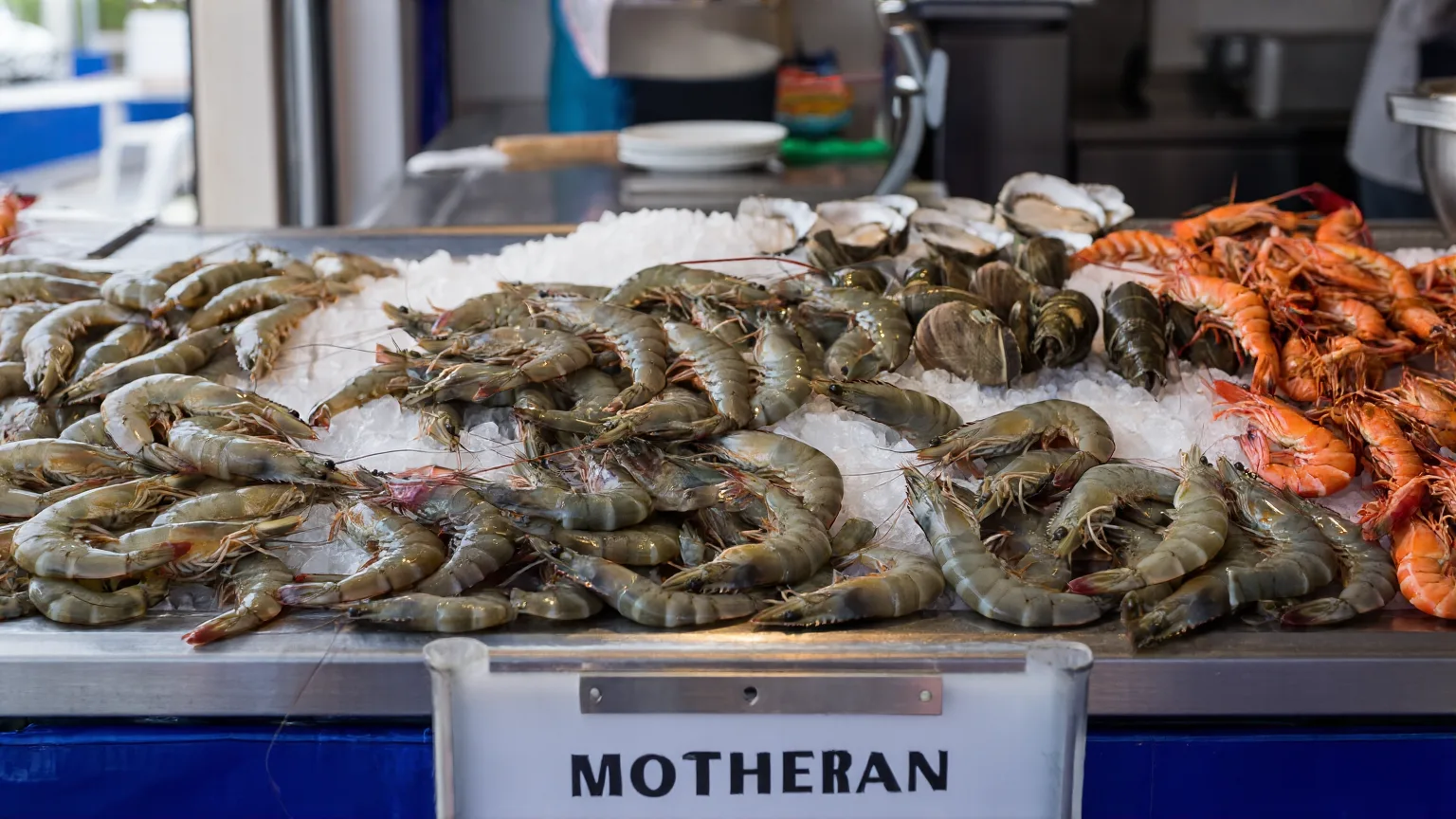
Prawns and Shrimp
Size is the main variable that determines how a prawn should be cooked. Small shrimp, often sold head-on and eaten whole, need only a minute or two in a hot pan or on a plancha with olive oil and salt. Larger prawns, including the red prawns associated with this coast, are usually best grilled or seared briefly, shell on, so the shell protects the flesh and the head releases its flavour into the pan juices.
Freshness in a raw prawn shows in the shell holding tight to the body and a faint, clean smell of the sea rather than ammonia. The head is often the most flavourful part and, on good quality prawns, is worth sucking out rather than discarding — it carries much of the concentrated flavour that the tail meat alone does not.
Crab
Crab is typically sold live or already cooked, and the two require different judgment. A live crab should feel heavy for its size and show active movement in its legs. A cooked crab should smell clean and sweet, never sharp or sour, and its shell should feel full rather than hollow when picked up.
Most of a crab's meat sits in the claws and legs, with a smaller amount of richer, darker meat in the body. Both are worth the effort of extracting, and a pick or the back of a small knife handles the work better than force.
Lobster and Spider Crab
Lobster is less common in everyday Mediterranean cooking than its reputation suggests, largely because of cost, but when available it is usually best kept simple: split and grilled, or poached briefly and served with little more than good olive oil or a light sauce. Overcooking turns the tail meat tough and dry within a couple of minutes past done, so timing matters more than seasoning.
Spider crab, more particular to this region, has a sweeter, more delicate flavour than common crab and is traditionally served simply — boiled in salted water and eaten cold or at room temperature, sometimes finished with a squeeze of lemon. It rarely needs more than that.
Judging Weight and Value at the Counter
Crustaceans are usually sold by weight, which makes it worth understanding how much of that weight is edible. A whole prawn or crab carries a significant proportion of shell and head, so what looks like a modest portion on the scale can still yield a generous amount of meat once picked or peeled — this is normal and not a sign of being short-changed. Pre-peeled prawns cost more per unit of edible meat for exactly this reason, since the labour of shelling has already been done.
Size grading, often shown as a count per kilo on packaging or menus, is a useful way to compare value across sellers, since a lower count means larger individual prawns and a correspondingly different price point than a high count of small ones. Comparing by grade rather than by price alone gives a fairer sense of what is actually being bought.
Frozen crustaceans, particularly larger prawns that are often frozen soon after catch, are not automatically a lesser choice than fresh ones sitting on ice for several days. Properly frozen and thawed correctly, in the refrigerator rather than at room temperature, they can be closer in quality to fresh than a fresh product that has simply been kept too long.