Matching Weight, Not Just Colour
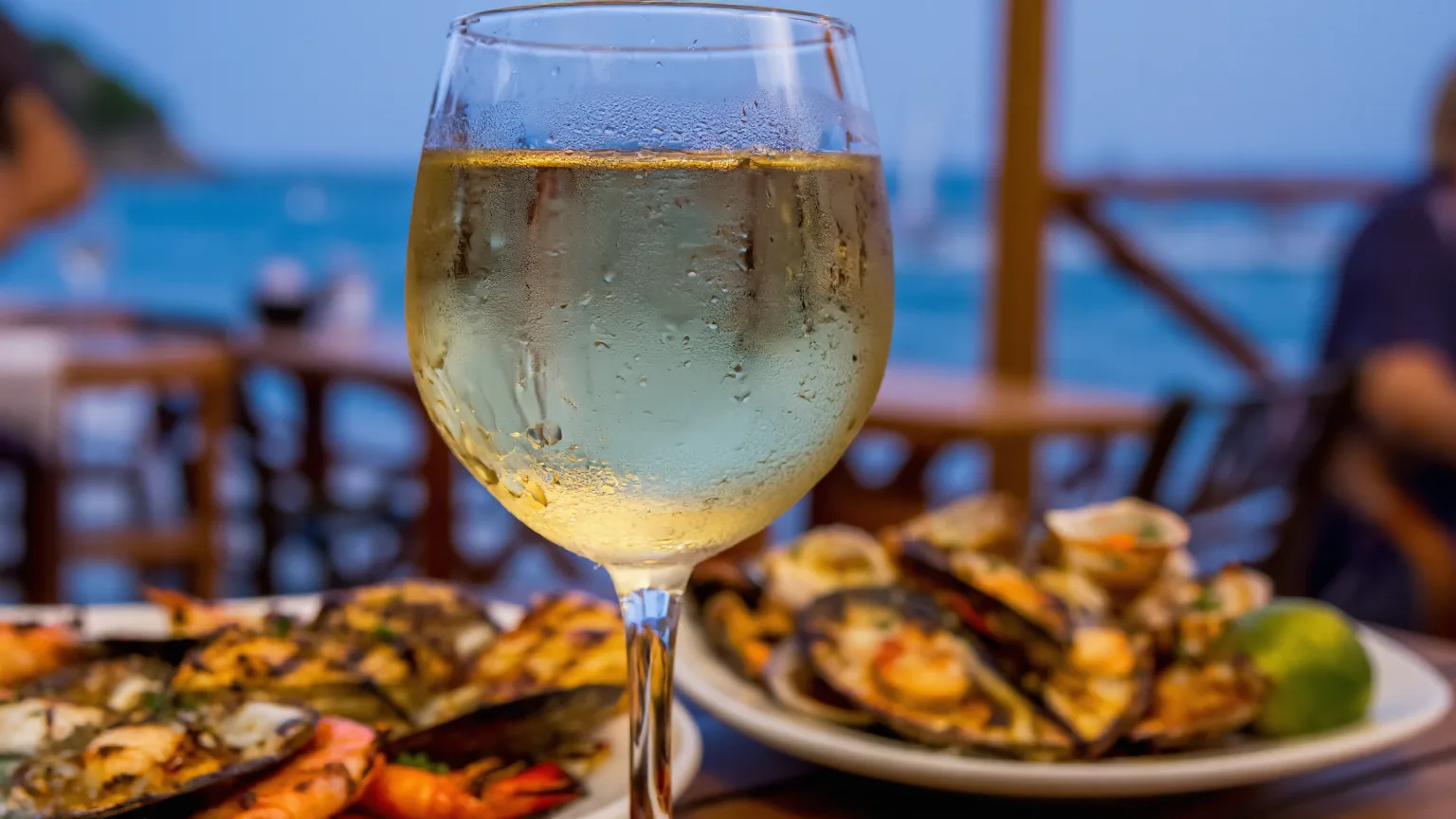
The old rule of white wine with fish is a reasonable starting point but not a complete one. What matters more is matching the weight of the wine to the weight of the dish. A light, delicate preparation, like a simply grilled sole or steamed clams, is easily overwhelmed by a heavy, oaked wine and pairs better with something crisp and light-bodied. A richer preparation, such as grilled tuna or a seafood stew with tomato and paprika, can carry a wine with more body and even, in some cases, a light-bodied red served slightly cool.
Local white wines from nearby Andalusian regions, typically dry, mineral and unoaked or lightly oaked, tend to suit the grilled and fried preparations common on this coast better than heavier, more textured whites built for richer, creamier dishes.
Acidity as the Real Connector
Acidity in a wine plays a similar role to a squeeze of lemon on a plate of fish: it cuts through richness and refreshes the palate between bites. This is why high-acid whites are the default recommendation for oilier fish and fried seafood — the acidity balances the fat rather than competing with the delicate flavour of the fish itself, the way a heavier or sweeter wine might.
Sparkling wine works on the same principle and pairs particularly well with fried seafood and shellfish, since its acidity and effervescence cut through oil in a way still wines cannot quite replicate.
When to Reach for Something Different
Dishes built on strong, assertive flavours, garlic, saffron, smoked paprika or a tomato base, can support wines with more character than a delicate piece of steamed fish would tolerate. A well-chilled, dry rosé is a genuinely useful middle option for many seafood dishes along this coast, particularly grilled preparations and mixed shellfish, offering more fruit and body than a very lean white without the weight of a red.
As with cooking method, the more reliable approach is to taste and adjust rather than follow a fixed formula: a wine that tastes too sharp or too heavy against a specific dish is worth swapping, regardless of what convention suggests.
Serving Temperature
Temperature affects a pairing as much as the wine itself. A white wine served too warm loses much of the crispness that makes it work with seafood in the first place, while one served too cold can mute its aroma and flavour almost entirely. A properly chilled white, cool but not ice-cold, tends to strike the right balance for most grilled and fried seafood on this coast.
Rosé follows a similar logic, doing its best work well chilled rather than merely cool, while a light red intended for richer seafood dishes benefits from being served slightly below typical red wine temperature, closer to a cool room than a warm one.
Glassware plays a smaller but real role too: a narrower glass helps preserve the aroma of delicate whites served with fish, while a slightly wider glass suits the fuller, more textured whites and rosés that go with richer seafood dishes. Neither choice needs to be precise, but both are worth a moment's thought before serving.