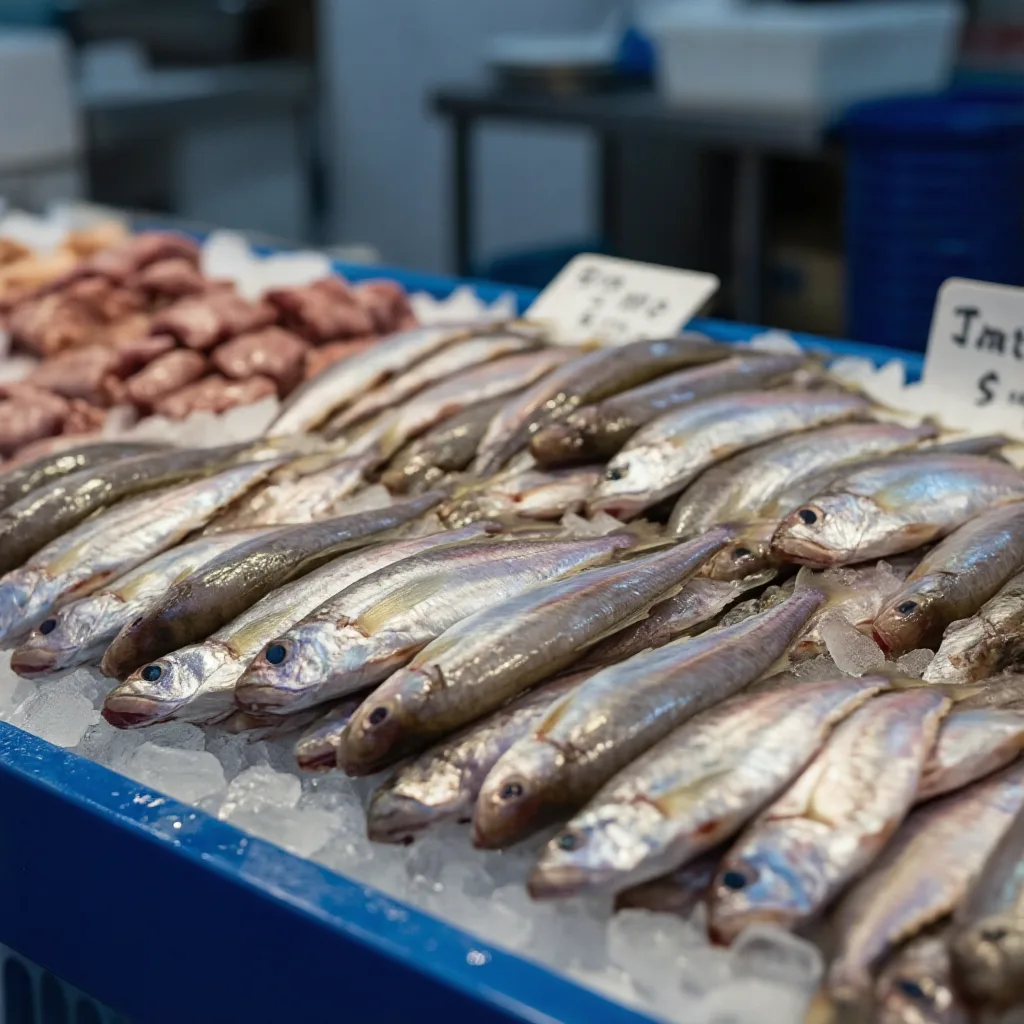
Appearance
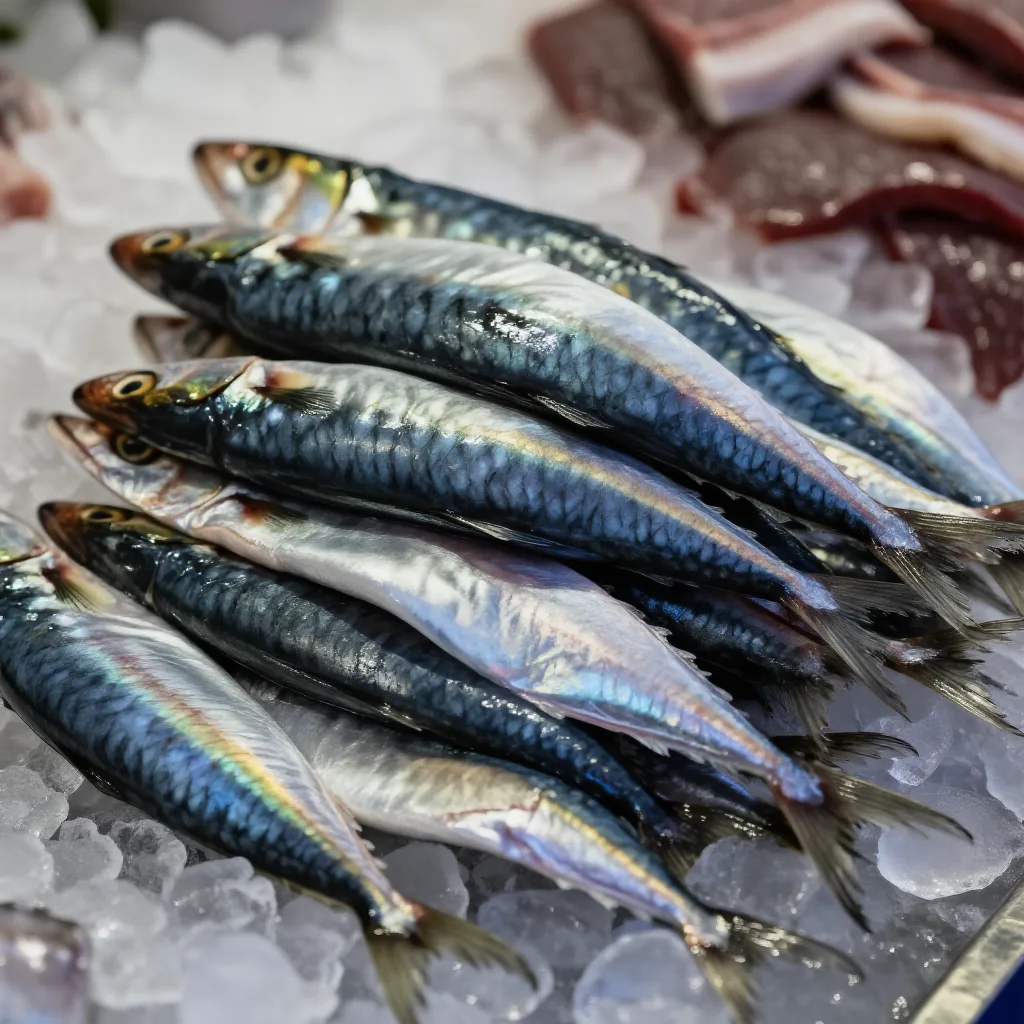
A slim, elongated fish with a pointed snout and a distinctly protruding lower jaw. The back is blue-green and the flanks are bright silver, with a faint silvery stripe running the length of the body. Anchovies are considerably smaller and slimmer than sardines, rarely reaching more than about 15 centimetres.
Nutrition
Like other small, oily Mediterranean fish, anchovies are a good source of omega-3 fatty acids and, when eaten whole, calcium. Being low on the food chain and short-lived, they generally accumulate fewer contaminants than larger fish. Cured or salted preparations are considerably higher in sodium than fresh ones.
Similar species
Sardines are the closest relative in local waters, sharing schooling behaviour, silver colouring and oily flesh, but anchovies are smaller, more slender, and carry a more concentrated flavour that intensifies further with curing or salting — the basis of the tinned anchovy known across Europe.
Related dishes
Boquerones en vinagre — fresh anchovy fillets marinated in vinegar, garlic and olive oil until the flesh turns opaque white — is a fixture of tapas bars across Andalusia. Fresh anchovies are also lightly floured and fried whole (boquerones fritos), while salt-cured anchovies, aged for months, are a separate and more intensely flavoured product.
Good to know
The white, vinegar-cured boquerón and the dark, oil-packed tinned anchovy come from the same fish; the difference is entirely in the curing method, not the species.