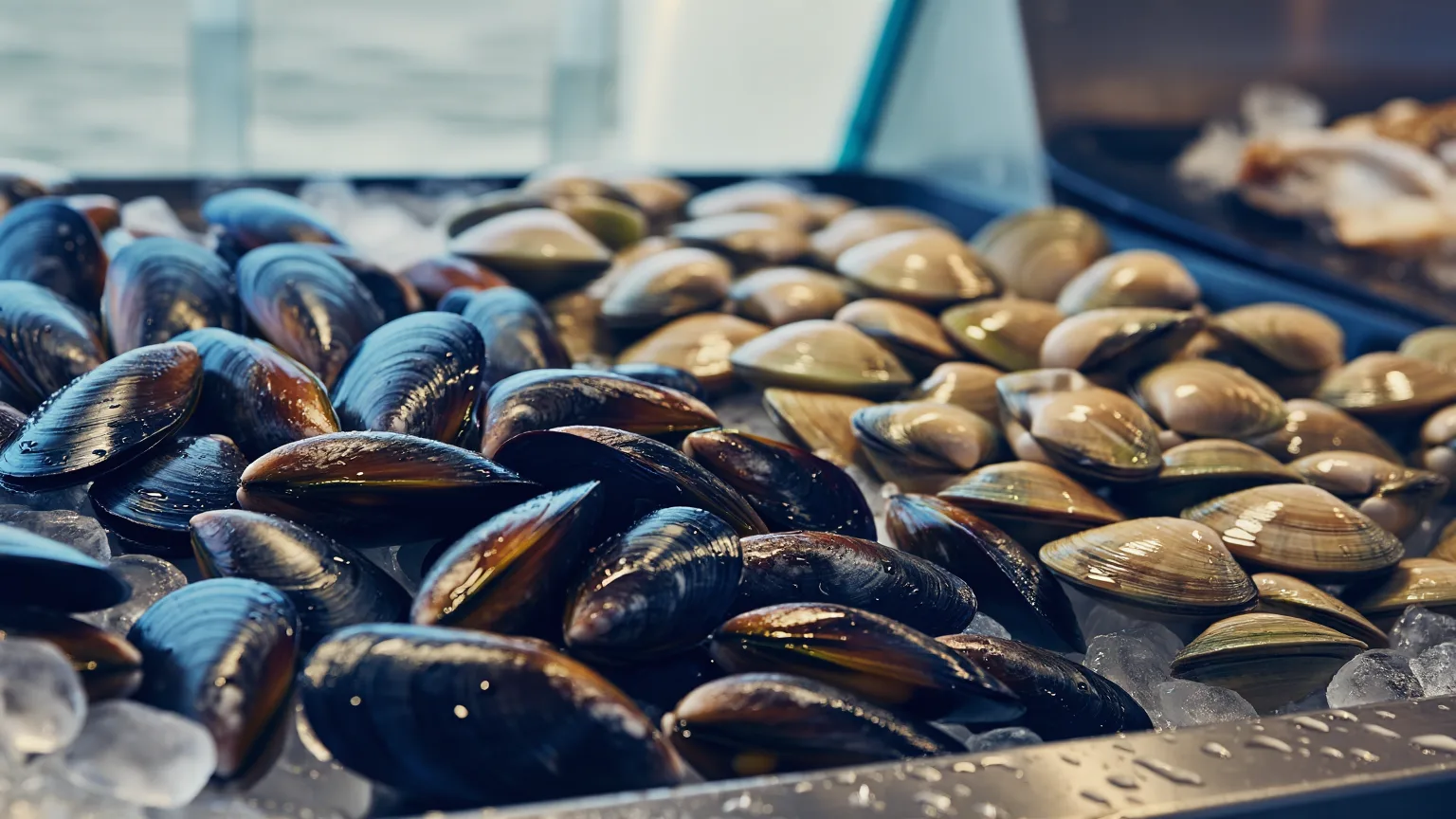
Buying Live Shellfish
Clams, mussels and oysters are almost always sold alive, and that liveliness is the single test that matters. A closed shell, or one that closes when tapped, is alive and fine to cook. A shell that stays open and unresponsive is dead and should be discarded before cooking, not after — cooking does not make a dead bivalve safe to eat.
Weight is a useful secondary check. A clam or mussel that feels unusually light for its size may be full of sand or seawater rather than meat, and one that feels unusually heavy for its size may already be dead and waterlogged. Neither is worth cooking.
Purging Sand and Grit
Clams in particular need time to expel the sand they filter-feed on. Soaking them in cold, well-salted water — roughly the salinity of seawater — for one to two hours before cooking allows them to open slightly and release grit naturally. Changing the water once partway through improves the result. Mussels generally need less purging but benefit from a firm scrub and the removal of the fibrous "beard" they use to anchor themselves to rocks.
Skipping this step is the most common reason a otherwise well-cooked dish of clams or mussels tastes gritty. It costs nothing but a little time.
Cooking Without Overworking Them
Bivalves cook fast and punish overcooking with rubbery, shrunken flesh. A pan of clams or mussels over high heat with a splash of white wine, garlic and a lid needs only a few minutes — as soon as the shells open, they are done. Any that remain closed after cooking should be discarded, the same rule as before cooking applies in reverse.
Oysters are usually eaten raw on this coast, needing nothing beyond a squeeze of lemon, though larger or less delicate varieties can be grilled briefly with garlic butter. In both cases, restraint is the technique — shellfish rarely benefit from being dressed up.
Storing Bivalves Before Cooking
Live shellfish need to breathe, so they should never be stored sealed in an airtight bag or submerged in fresh water, which kills them. The better approach is a bowl covered loosely with a damp cloth, kept in the coolest part of the refrigerator, ideally used within a day or two of purchase. Ice can sit alongside the shellfish rather than directly on it, keeping the temperature low without crushing the shells or drowning them in meltwater.
Any dead shellfish found among a batch of otherwise live ones at the point of storage, not just at the point of cooking, should be removed straight away, since a small number of dead individuals will not spoil the rest if caught early, but left too long they will.
Beyond Bivalves: Squid, Octopus and Cuttlefish
Cephalopods are often grouped with shellfish in everyday conversation, though biologically they are neither bivalve nor crustacean. Squid and cuttlefish are best cooked either very briefly, seconds to a couple of minutes over high heat, or very slowly for well over an hour, since the middle ground turns their flesh tough and rubbery. Octopus follows the slow route almost exclusively, needing a long, gentle simmer to break down its naturally dense muscle before any quick finishing sear on a grill or plancha.
Freshness signs for cephalopods differ slightly from fish: firm, glossy flesh, a clean smell, and skin that has not begun to separate or turn opaque and dull are the main things to look for at the counter.