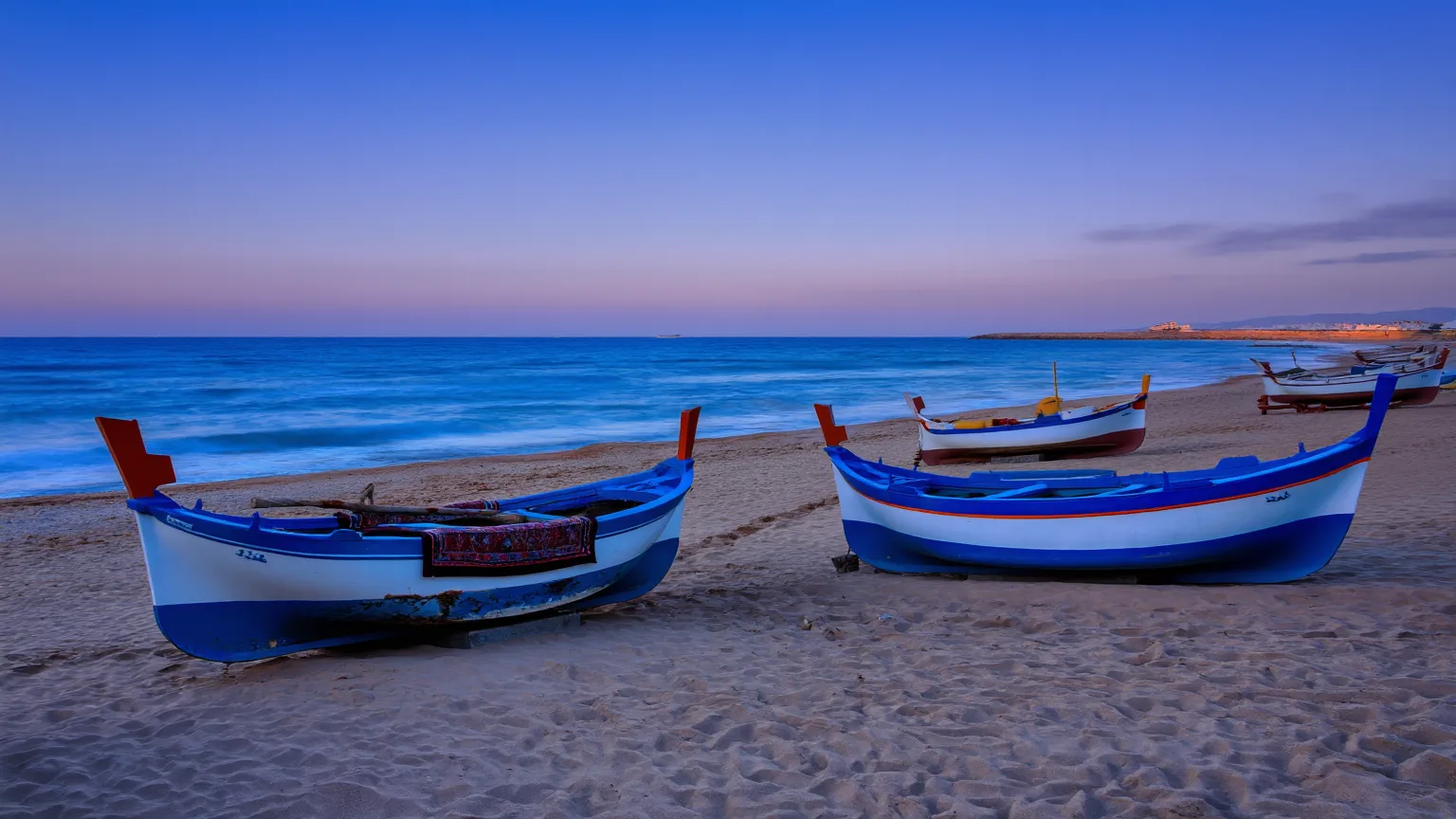
A Working Coast Before a Resort Coast
Long before Marbella became known internationally as a resort destination, it was a fishing town like many others along the Costa del Sol. Small crews worked from the shore and nearby waters, landing catches that supplied local households and markets directly.
That identity has not disappeared; it has simply become less visible, overlaid by decades of tourism development. But the fishing port still operates, and the practical knowledge it represents, of tides, seasons and species, continues to inform how seafood is sourced and served locally.
Small-Boat Methods
Traditional Andalusian coastal fishing has long relied on relatively small vessels and selective methods suited to inshore waters, rather than large-scale industrial trawling. This favours variety over volume: a mixed catch of smaller fish and shellfish rather than a single dominant species.
This small-scale approach is part of why Mediterranean seafood cooking in towns like Marbella tends to celebrate a range of humble, affordable fish, sardines, anchovies, mackerel, alongside the better-known prawns and larger catches that get more attention on menus.
A Living Heritage, Not a Museum Piece
It would be easy to treat Marbella's fishing history as something purely nostalgic, preserved for visitors rather than practiced. That is not quite accurate. Boats still leave the port, and the seasonal availability of certain species still shapes what kitchens offer, even if the town's economy has diversified well beyond fishing.
Understanding this heritage adds context to a meal here. A plate of grilled fish is not just a menu item; it is the latest link in a chain of coastal work that predates the marinas, hotels and golf courses by generations.