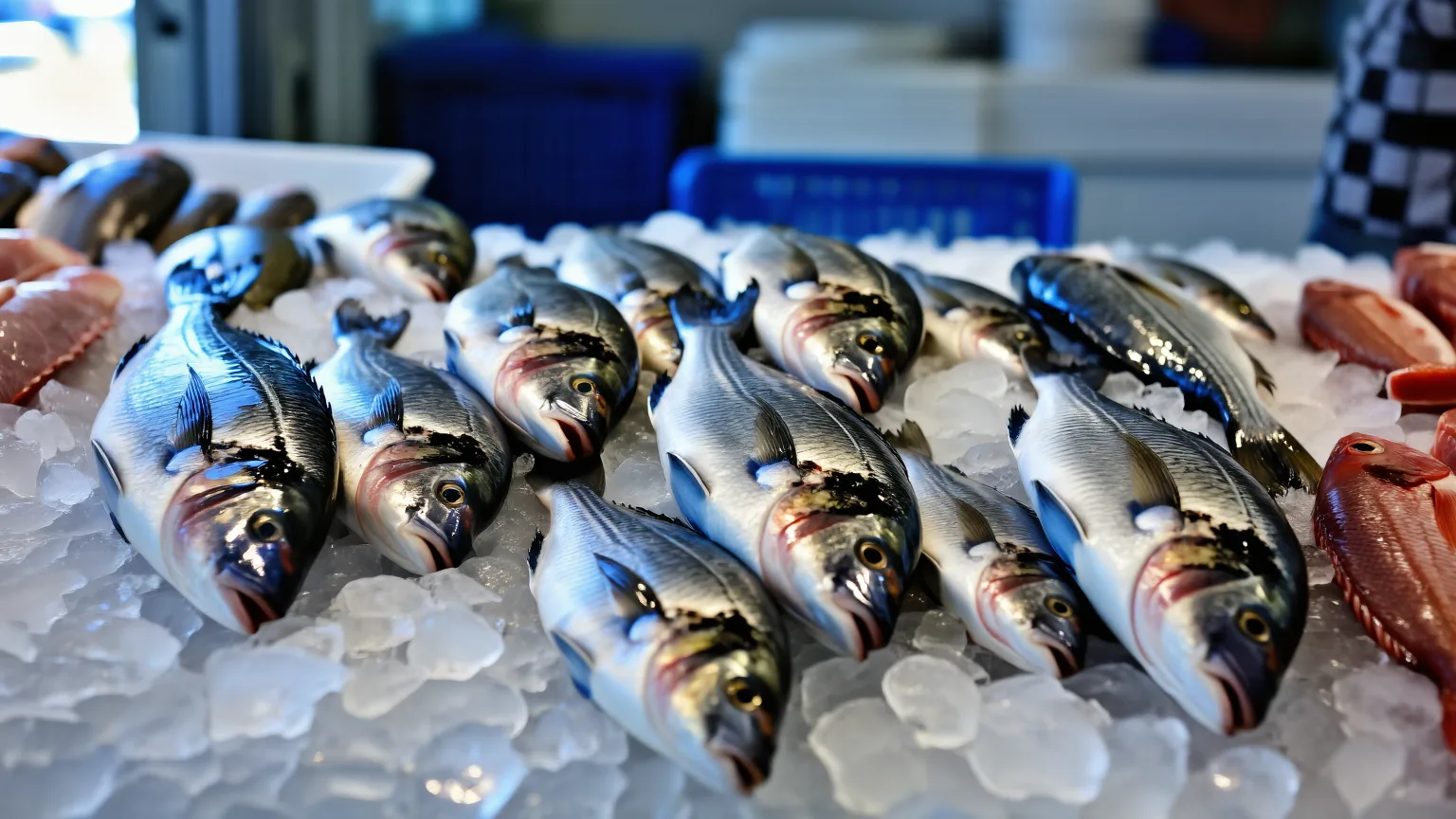
Oily Fish and White Fish
The most useful distinction for a home cook is not the name of the fish but its fat content. Oily fish — sardines, anchovies, mackerel, bonito — carry fat through their flesh, which makes them forgiving on a hot grill and well suited to strong flavours like vinegar, garlic or smoke. Their season and abundance make them the everyday fish of this coast, sold cheaply and eaten often.
White fish — hake, sea bream, sea bass, John Dory, monkfish — carry very little fat, so their flesh dries out quickly under high heat. These are the fish that reward gentler treatment: poaching, steaming, baking in a salt crust, or a short turn in a pan finished with butter or olive oil off the heat. Overcooking is the single most common mistake made with white fish, and it happens in minutes, not hours.
Where a Fish Lives Shapes How It Tastes
Fish that live near the seabed, like hake, monkfish and red mullet, tend to have firmer, denser flesh because they work against currents and sediment. Fish that swim in open water in shoals, like sardines and mackerel, have softer flesh built for speed rather than resistance. This is not a minor detail — it is why a bottom-dwelling fish holds together on a grill while a shoaling fish falls apart, and why recipes rarely swap freely between the two.
Rocky coastline, like much of the shore around Marbella, also produces fish with more defined flavour than fish farmed or fished from flat, sandy seabeds, because rocky habitats support the small crustaceans and molluscs that give predator fish like sea bass and grouper their character.
Whole Fish Versus Fillets
Buying a fish whole, with bones and skin intact, is usually the better choice when it is available. Bones conduct heat more evenly during cooking and help the flesh stay moist, and skin protects the fillet from drying out on a grill or in a pan. A whole fish is also easier to judge for freshness — clear eyes, bright red gills and firm flesh are far harder to fake than on a fillet already cut away from them.
Fillets have their place, particularly for larger fish like tuna or swordfish where a whole fish is impractical, or for quick weeknight cooking. But for anything under a kilo or so, ask for it whole and have it cleaned rather than filleted — you lose less to waste and gain more flavour in the pan.
Farmed and Wild Fish
Both farmed and wild fish have a place on this coast, and neither is automatically the better choice. Sea bream and sea bass, two of the most commonly eaten fish in the region, are widely farmed in coastal pens, and well-raised farmed fish of these species can be very good — consistent in size, reliably available, and often more affordable than their wild counterparts. Wild fish of the same species tend to have slightly firmer flesh and more variation in flavour, shaped by whatever they have been feeding on.
The practical difference shows mostly in texture and price rather than any single measure of quality. A good fishmonger will usually tell you, unprompted, whether a fish is farmed or wild, since it is a normal part of describing what is on the counter — and it is a fair question to ask if it is not offered.