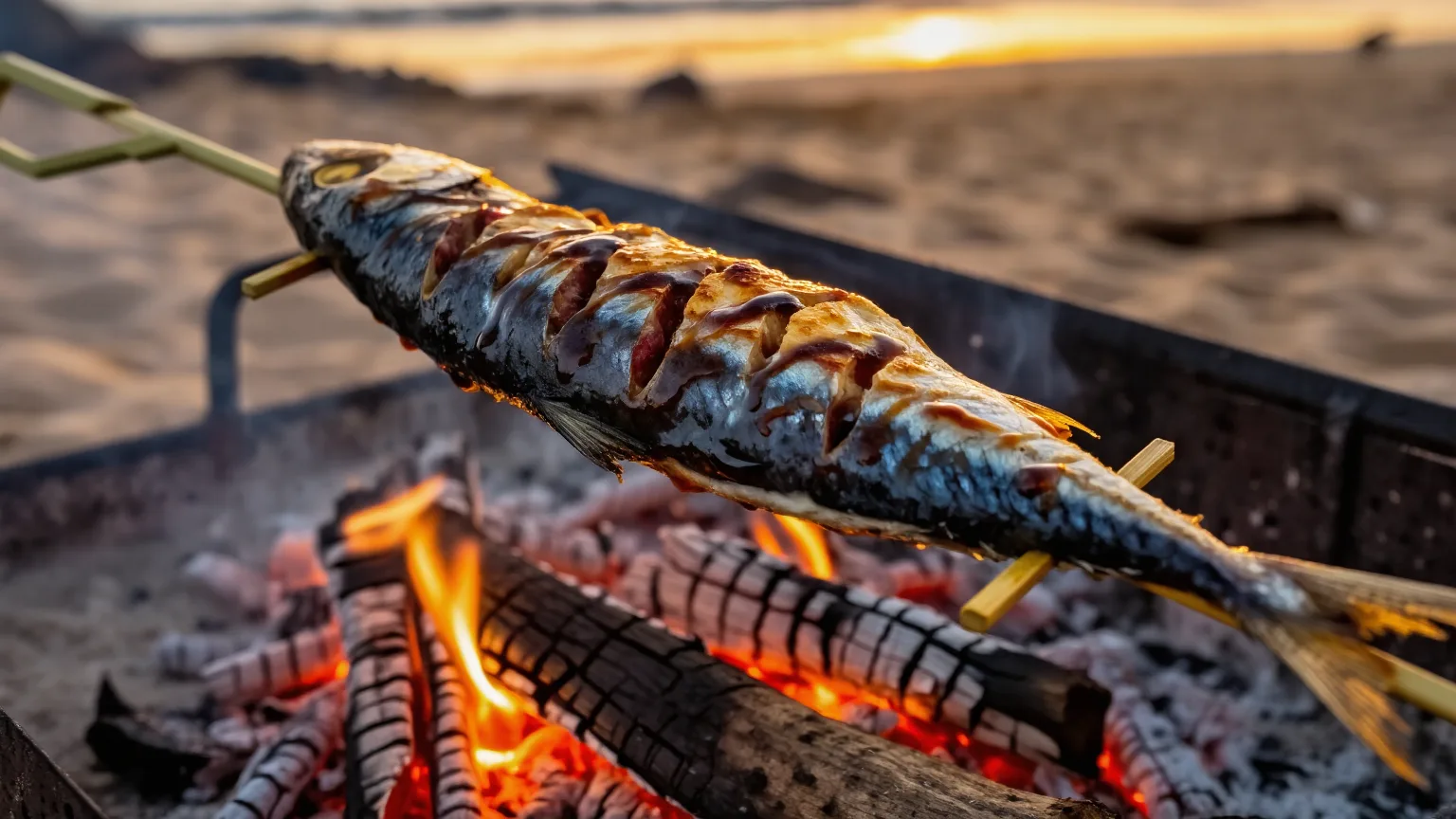
Espeto: Fire and Skewers
Espeto is the technique most closely tied to this stretch of coast: whole small fish, most often sardines, threaded onto cane or metal skewers and angled over an open wood fire, traditionally built in a half-buried boat filled with sand. The fish cook quickly in the direct heat of the flame, and the wood smoke gives them a character no indoor method reproduces. It is a beach and chiringuito tradition rather than a restaurant kitchen one, and the fish are usually eaten simply, with nothing more than a squeeze of lemon and coarse salt.
The technique works because the fish are small and oily enough to cook through in minutes without drying out, and because the skewer allows the fire to be controlled by angle and distance rather than a dial.
Frying: Pescaíto Frito
Andalusian fried fish, pescaíto frito, is built on a light dusting of fine wheat flour or chickpea flour and a short, hot fry in olive oil, producing a thin, crisp crust rather than a heavy batter. Small fish and squid are the usual candidates, cut or left whole depending on size, and the frying itself takes little more than a minute or two per batch. The oil temperature matters more than any other variable — too low, and the fish absorbs oil and turns greasy rather than crisp.
This method is common across the Andalusian coast precisely because it suits small, delicate, quick-cooking fish that would fall apart or dry out under slower methods.
Grilling, Salt-Crust and the Plancha
A hot plancha — a flat metal griddle — is the workhorse method for prawns, small squid and firm fish fillets, giving a good sear in very little time with minimal equipment. Whole larger fish are often grilled directly over coals or baked in a thick crust of coarse salt, which seals in moisture and seasons the flesh gently through the skin without making the fish taste salty itself; the crust is broken and discarded before serving.
What unites these methods is restraint: high heat, short cooking times, and very little added beyond olive oil, salt and citrus. The techniques are built around good raw material rather than compensating for average material with heavy sauces.
Rice and Stew-Based Cooking
Not every seafood dish on this coast is fast and direct. Rice dishes built around a seafood stock, or fumet, take considerably longer and rely on a slow build of flavour from sofrito — onion, garlic and tomato cooked down slowly — before rice and stock are added. Arroz caldoso, a looser, more soup-like rice dish, and the many varieties of seafood stew found around Andalusia work on the same principle: extracting flavour gradually rather than searing it in quickly.
These slower methods are usually reserved for shellfish and cuts of fish that hold up over longer cooking, such as monkfish or cuttlefish, rather than the delicate white fish or small oily fish that suit fast grilling or frying far better.
A well-made fumet is worth the effort it takes, since it is the difference between a rice or stew dish that tastes genuinely of the sea and one that merely contains seafood. Simmered gently rather than boiled hard, and strained rather than left cloudy, a good stock is one of the few places in this style of cooking where patience matters more than heat.