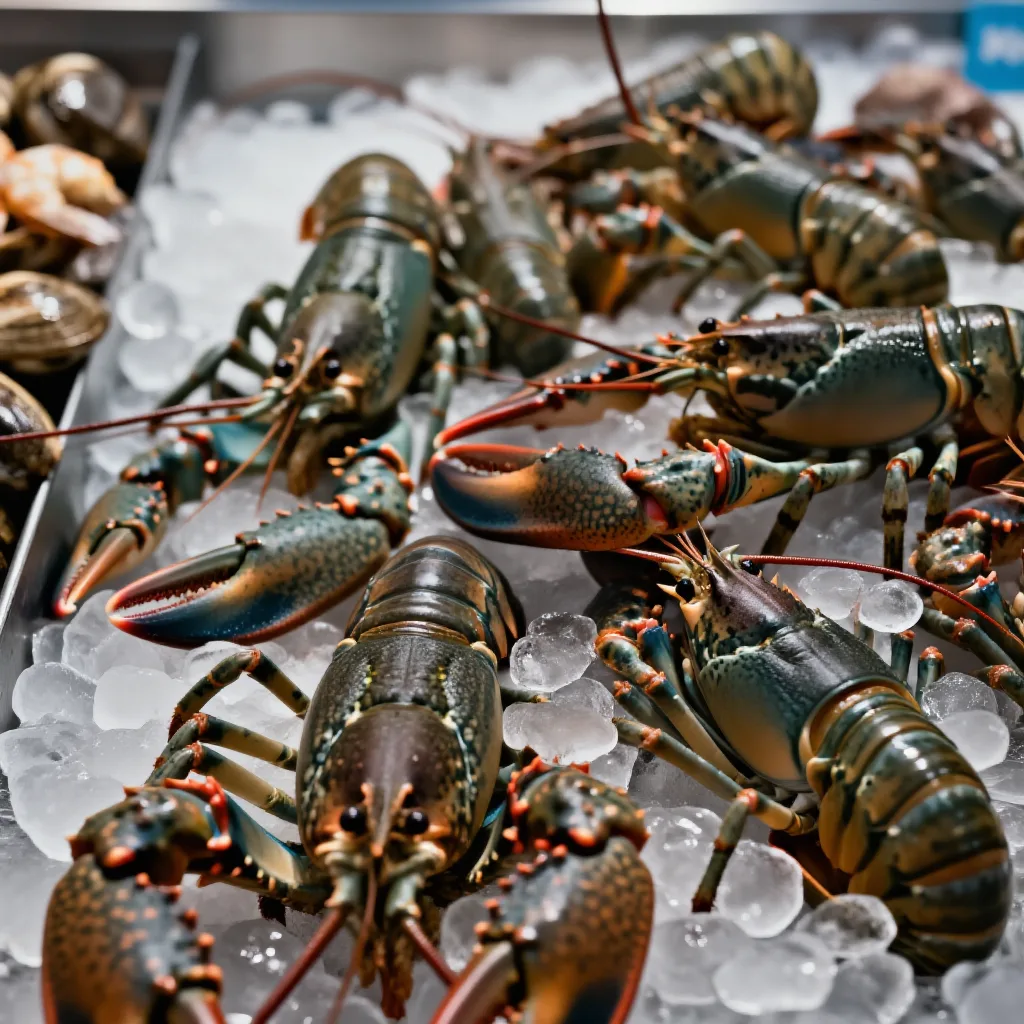
Appearance
Carabineros are large prawns, often reaching 15 to 20 centimetres, with a vivid deep-red shell that is unusual among crustaceans for showing that colour in life rather than only after cooking. Long antennae, a pronounced rostrum, and a dense, meaty tail distinguish them at the fish counter from the many paler shrimp and prawn species sold alongside them.
Nutrition
Like other crustaceans, carabineros are a lean source of high-quality protein, naturally low in fat. Their fat-rich heads, often the most sought-after part of the animal, concentrate flavour along with a share of the fish’s micronutrients, including iodine and other minerals typical of seafood.
Similar species
True langoustine (Nephrops norvegicus), sometimes called Dublin Bay prawn, is a distinct, pale pink, lobster-shaped crustacean with slender claws, more associated with Atlantic and northern European waters. In Spanish markets the word "carabinero" specifically denotes the deep-water red prawn, while "langostino" refers to a separate, smaller prawn — the naming can be confusing to visitors but is precise among fishmongers.
Related dishes
Carabineros are most often simply grilled or seared briefly in a very hot pan with olive oil, treatments that protect their delicate flesh while concentrating flavour in the shell and head. They also appear in rice dishes and stews, where the head is pressed to release its flavourful juices into the broth.
Good to know
Because carabineros are caught at considerable depth, they were historically a minor part of the catch; their current status as a prized, expensive delicacy is a more recent development in Spanish gastronomy.