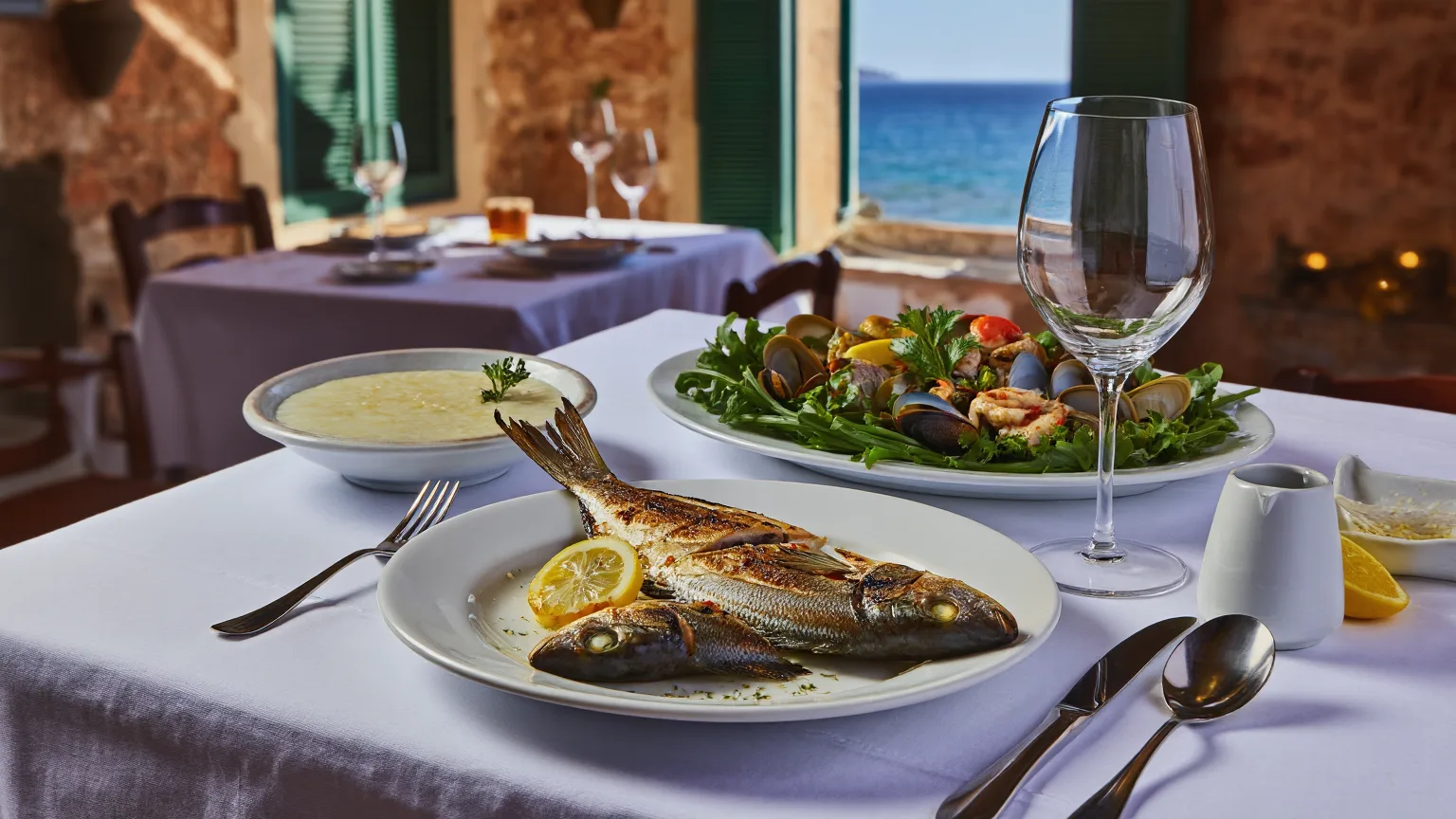
What quality actually looks like
The clearest sign of a good seafood restaurant is rarely on the menu — it is in the kitchen's relationship with the catch. Places that work closely with local boats and markets tend to keep their offering shorter and more seasonal, because they are cooking what arrived that morning rather than what a laminated menu promises year-round.
A short, changing selection of fish is often a better sign than a long, static one. It suggests the kitchen is buying fresh rather than relying on frozen stock to fill gaps, and that the chef is willing to adapt the menu to what the sea actually provided.
Reading a menu before you sit down
A menu that names the fish by species, and sometimes by origin or catch method, is usually written by a kitchen that takes sourcing seriously. Vague language — "fish of the day" with no further detail, or a photograph instead of a description — is not automatically a bad sign, but it gives you less to go on.
It is entirely reasonable to ask staff where the fish came from and how it was prepared. A confident, specific answer is a good sign. A vague one is useful information too.
Matching the place to the occasion
The "best" restaurant for a quick lunch by the port is not the same as the best one for a long, unhurried dinner. Think about pace, noise level and setting as much as the food itself — a kitchen can cook well and still be the wrong fit for what you want that evening.
Pricing, hours and availability at any given restaurant can change with the season, so it is worth confirming details directly before you go rather than relying on what you read somewhere in advance.
This guide is editorially independent. No restaurant pays for placement or coverage here, and details such as hours, pricing and status should always be confirmed directly, since they can change.