A different physical setting
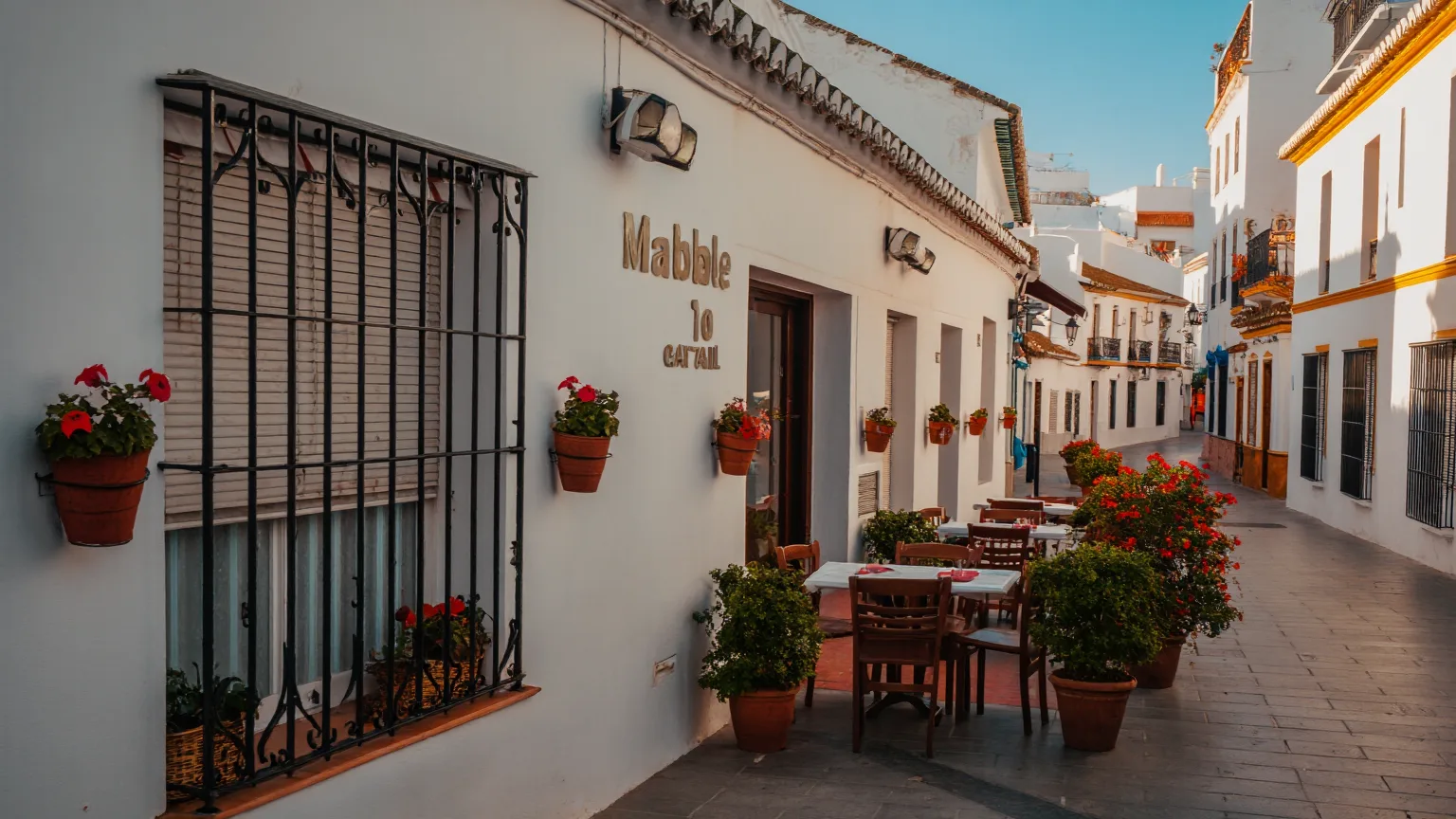
Old Town restaurants generally work within tight, historic buildings and small outdoor terraces tucked into plazas rather than open seafront positions. Space is limited, tables are often close together, and the architecture itself — thick walls, narrow doorways, flower-lined balconies — shapes the atmosphere as much as the menu.
This compactness tends to favour smaller, more focused menus, since kitchens here rarely have the space or turnover of larger marina restaurants.
Cooking rooted in tradition
The Old Town leans more toward traditional Andalusian preparations than international ones — fried fish, grilled sardines, seafood stews built on long-standing recipes. Many of these kitchens have served the same neighbourhood for generations, which shows in the consistency of technique rather than in any effort to innovate.
Portions and presentation here are usually less elaborate than fine dining, closer to the register of a good home kitchen scaled up for service.
Practical notes for visiting
Evenings in the plazas can get busy, particularly on warm nights, and many of the best tables have no formal reservation system — arriving early or being willing to wait is often part of the experience. Wandering a few streets back from the most obvious plazas can also turn up quieter options.
Given the age and small scale of many of these buildings, opening days and hours vary more than in purpose-built tourist areas, so confirming directly before visiting is worthwhile.
This guide is editorially independent. No restaurant pays for placement or coverage here, and details such as hours, pricing and status should always be confirmed directly, since they can change.