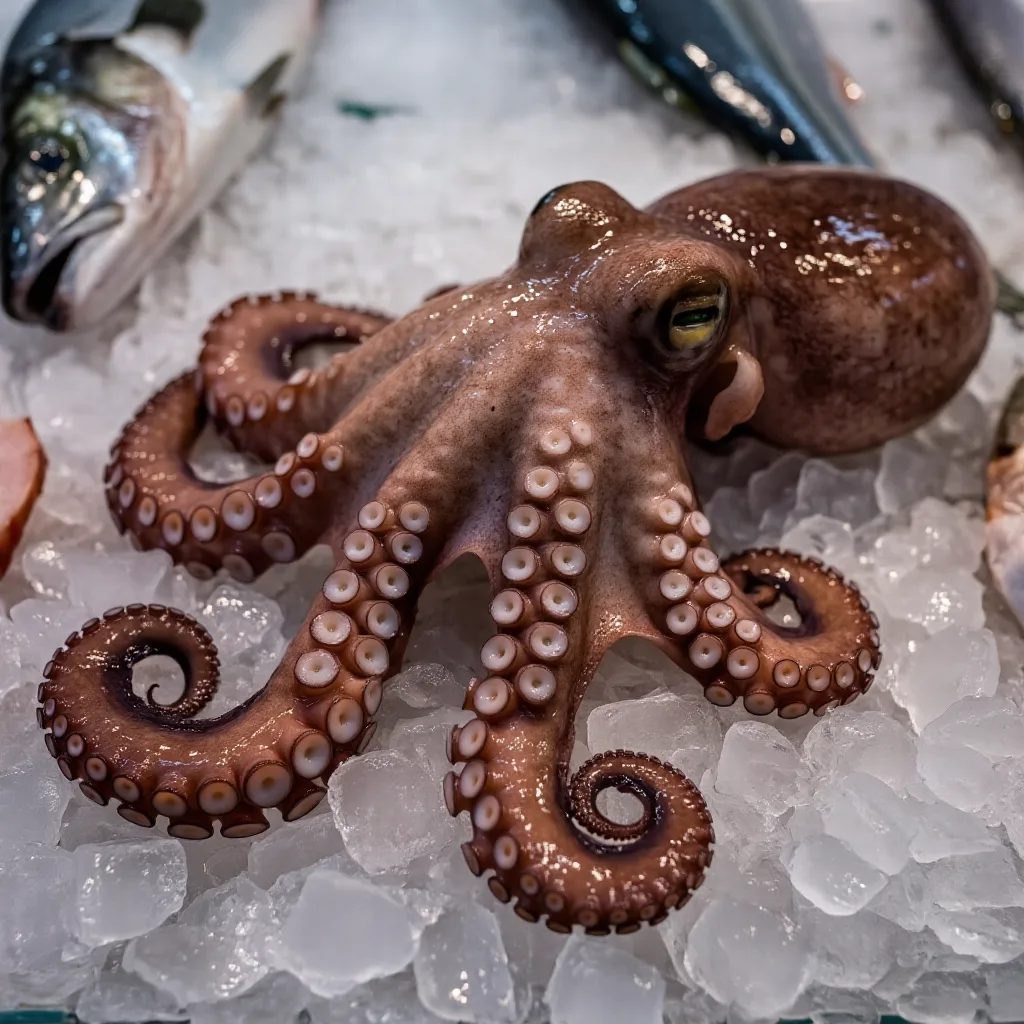
Appearance
Octopus vulgaris has a soft, bulbous body called a mantle and eight long, muscular arms lined with two rows of suckers, used for both movement and capturing prey. Skin colour is highly variable and can shift within moments — from mottled brown and grey to reddish tones — thanks to specialised pigment cells the animal uses for camouflage.
Nutrition
Octopus is a lean source of high-quality protein with very little fat, along with useful amounts of minerals typical of seafood, including iron and zinc. Because it absorbs the flavour of its cooking liquid and any accompanying oil, finished dishes vary considerably in richness depending on preparation.
Similar species
Cuttlefish and squid are the octopus’s closest relatives regularly seen at Spanish fish counters; both belong to the same broader group of cephalopods but have a more elongated body, internal shell remnants, and generally cook faster and to a different, chewier texture than octopus.
Related dishes
Pulpo a la gallega — boiled octopus sliced into rounds, dressed with olive oil, coarse salt and smoked paprika, traditionally served on a wooden plate — is the best-known preparation across Spain. Grilled octopus, often finished on very high heat after boiling for a charred exterior and tender interior, is equally common on the Costa del Sol.
Good to know
Octopuses are considered among the most intelligent invertebrates known, capable of problem-solving and tool use, and a longstanding kitchen tradition holds that beating the flesh, or freezing it before cooking, helps break down its muscle fibres for a more tender result.